 PayPoint · For employers & unions
Payroll premiums, collected and reconciled.
Employers and unions upload what payroll deducted. PayPoint checks every line against the schedule, matches the money that arrives, and flags what is short — so each premium lands on the right policy.
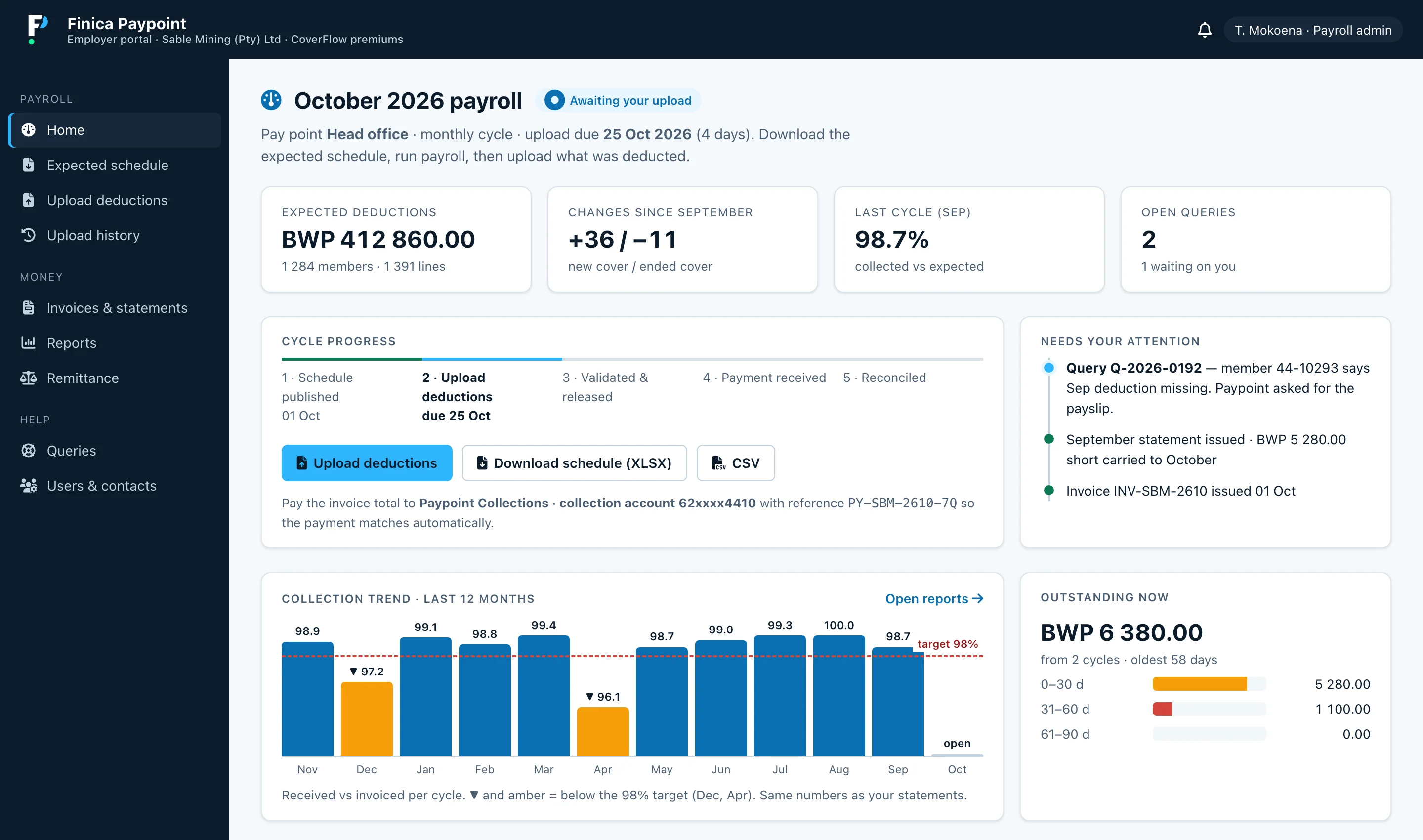
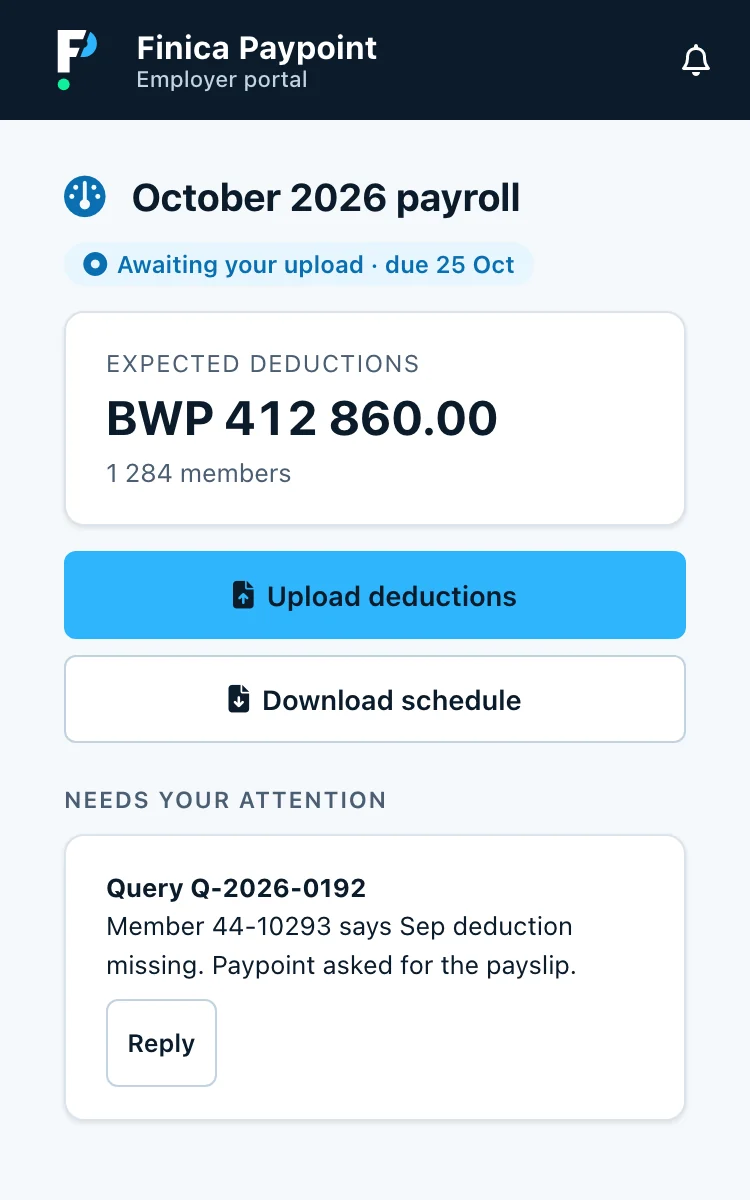
Payroll deductions are where premiums go missing.
Premiums paid through payroll pass through many hands before they reach a policy. Every hand-off is a place for a member to fall off cover. PayPoint closes the gaps.
- Deduction files arrive late, in a different layout every month.
- A member’s cover ends, but the deduction keeps running.
- The money lands short, and no one can say which lines.
- Payroll teams chase statements and queries by email.
One monthly cycle, from schedule to reconciled.
- 01
Schedule
PayPoint publishes who should be deducted, and how much.
- 02
Upload
Payroll uploads the deductions it actually made.
- 03
Validate
Every line checked. Errors fixed before release.
- 04
Pay
One payment with a reference that matches itself.
- 05
Reconcile
Expected, deducted, and received — matched line by line.
Errors caught before they cost anyone cover.
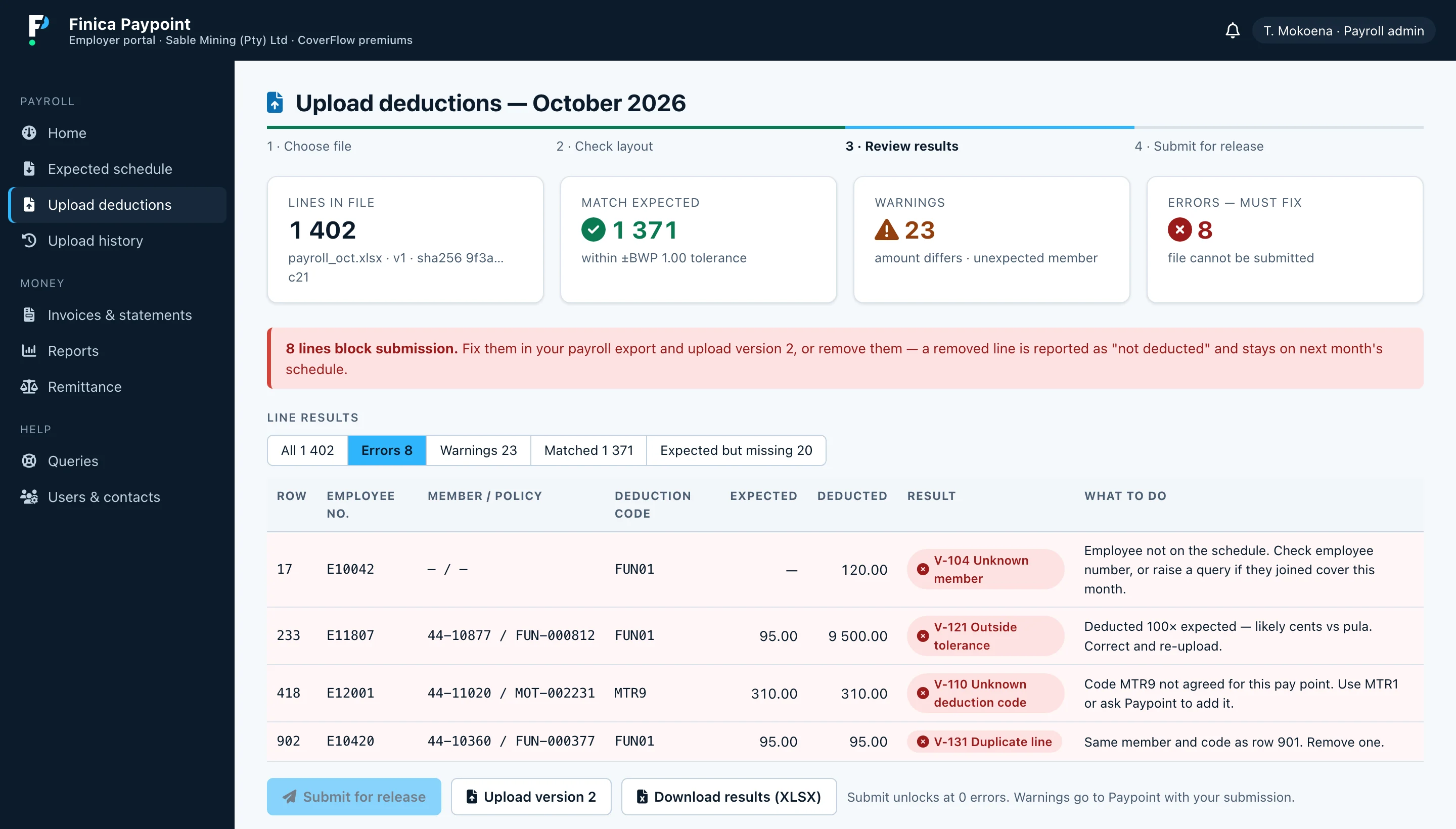
A monthly visit that tells payroll exactly what to do next. Upload the deduction file, see every line checked against the schedule, and fix problems before the money moves.
- Download the expected schedule as XLSX or CSV
- Upload what payroll deducted — errors show with what to do
- Submit unlocks at zero errors, so bad lines never go through
- Invoices, statements, and queries in one place
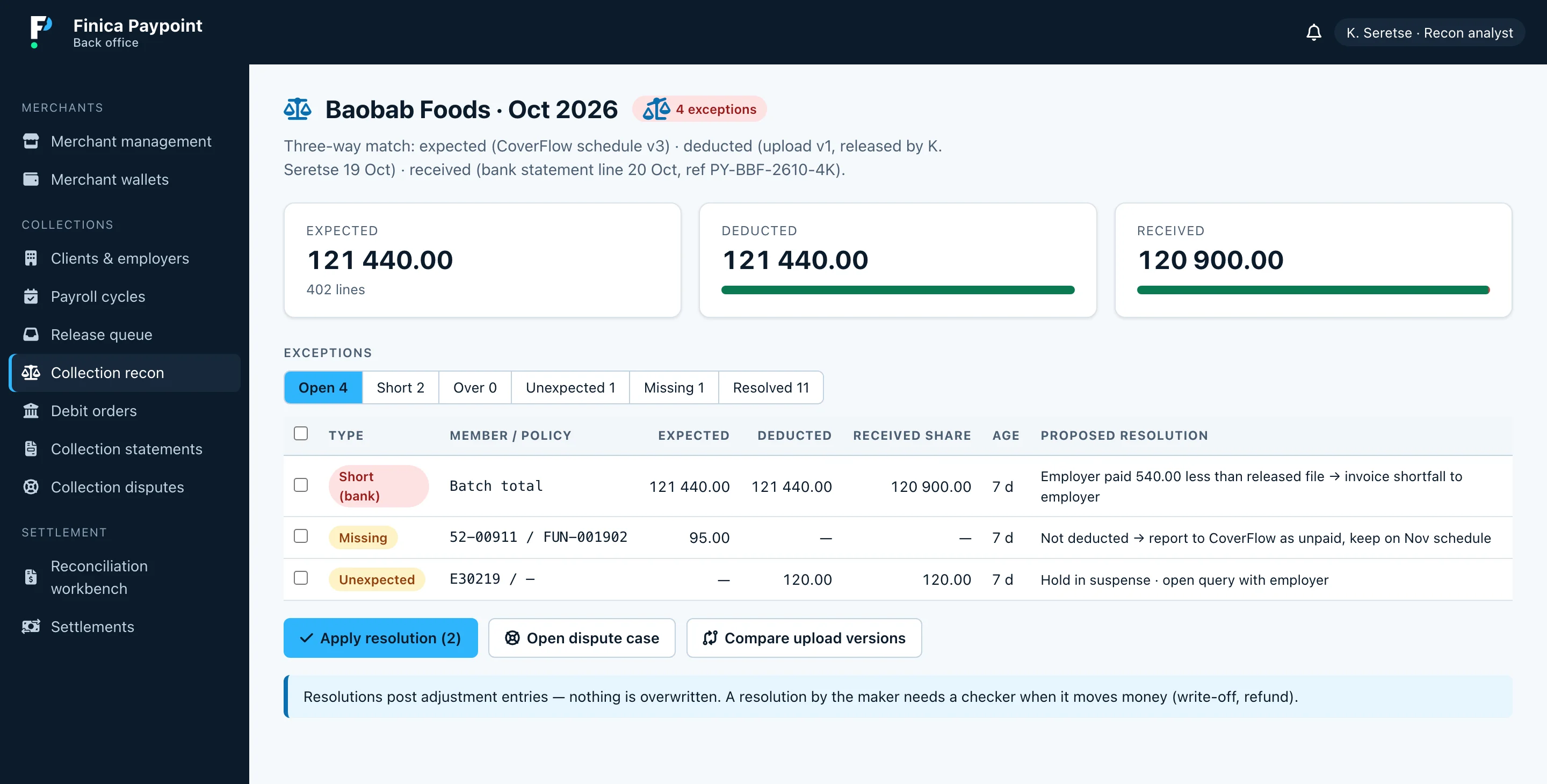
Expected. Deducted. Received.
PayPoint matches the schedule, the payroll file, and the bank statement for every employer and period. What does not match becomes an exception with a proposed resolution.
- Expected, deducted, and received — side by side
- Short, over, missing, and unexpected lines sorted for you
- Proposed resolutions you can apply in bulk
- Adjustments are posted, never overwritten — with a checker when money moves
Built for everyone between the payslip and the policy.
Employers
Payroll administrators upload deductions and fix rejected lines. Finance approvers release the file and pay one invoice.
Unions
Collect member premiums through the payroll deductions employers already run, with a clear view of who was deducted and who was not.
Insurers & administrators
Every premium arrives with the policy it belongs to. Shortfalls and missing members come back as work, not surprises.
Run every collection cycle from one place.
Payroll deductions and bank debit orders, worked by one collections team.
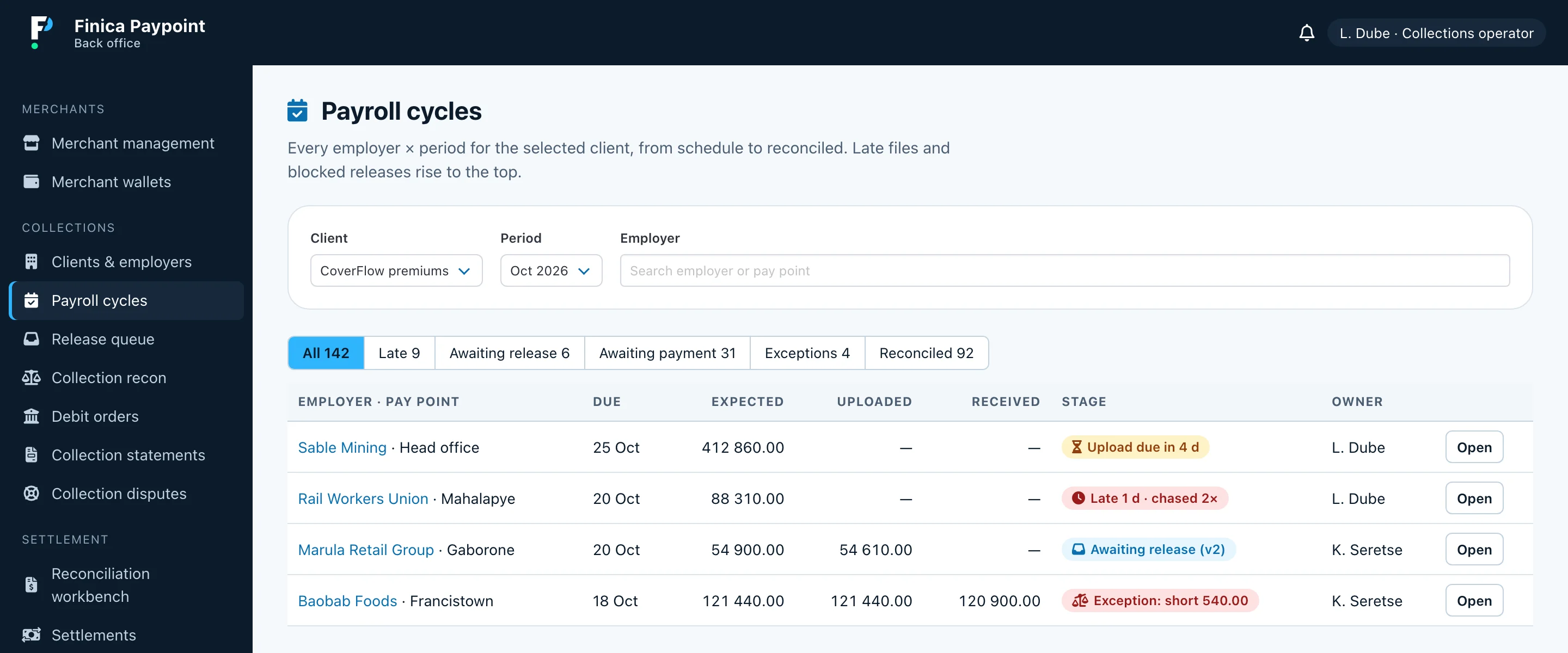
Payroll cycles
Every employer and period on one board. Late files and blocked releases rise to the top.
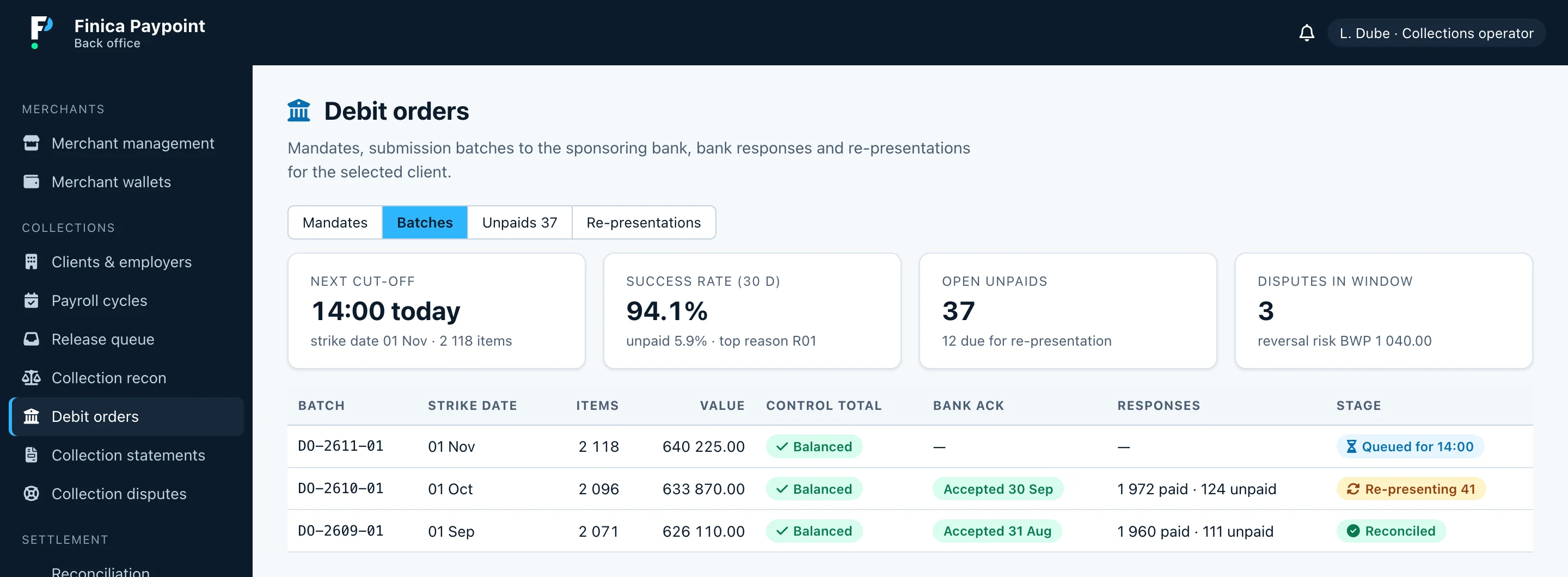
Debit orders
Mandates, batches, unpaids, and re-presentations for members paid by bank debit order.
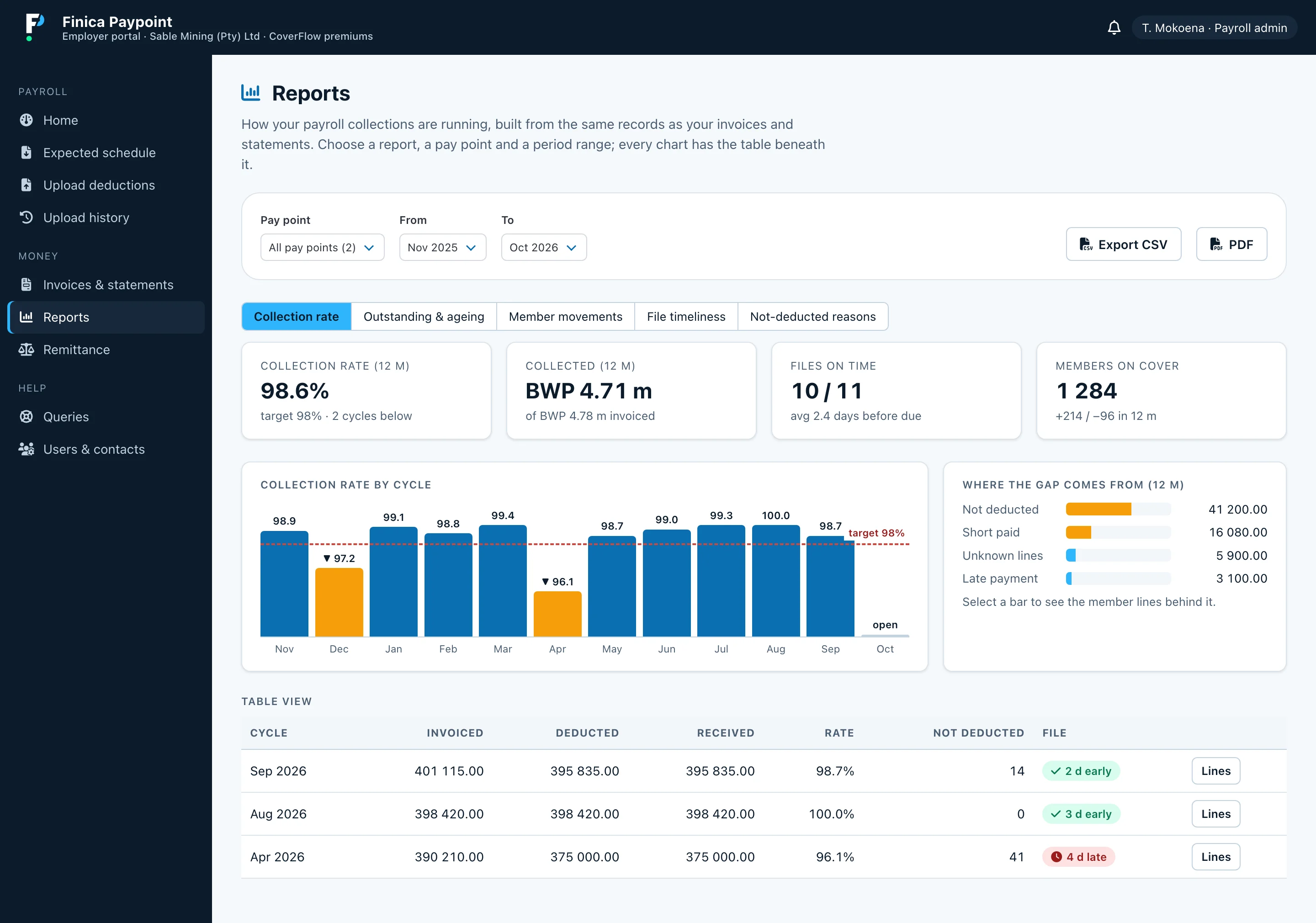
Employer reports
Collection rate, ageing, member movements, and file timeliness — every chart with its table.
Money moves with a record behind it.
Maker and checker
Uploads are released by an approver. Write-offs and refunds need a second pair of eyes.
Nothing overwritten
Every correction is a new entry, so the history of each premium stays intact.
Scoped access
Employers see only their own pay points. Operators see what their role allows.
Every payroll premium, on the right policy.
Bring your employers, unions, and collections team onto one monthly cycle.